
 Seasonal Care
 Mulch does more than make a garden bed look sharp — it regulates soil temperature, holds moisture, and suppresses weeds. But timing matters, especially in Middle Tennessee where our clay-heavy soil and swing between hot summers and cold snaps put extra demand on garden beds.
The Best Time to Mulch
For most Clarksville-area properties, early-to-mid spring is the ideal window — after the last hard frost but before summer heat and weed pressure ramp up. Mulching at this point locks in spring moisture and gets ahead of weed seed germination before it starts.
A second light top-off in fall is worth considering for beds that get heavy sun exposure or that back up to the house foundation, helping insulate root systems heading into winter.
How Often Does Mulch Need to Be Replaced?
Most properties need a fresh application once a year. Organic hardwood mulch breaks down over time — that’s part of what makes it good for the soil — but it also means color fades and depth thins out, usually needing a refresh by the 12-month mark.
Signs Your Beds Need Mulch Now
- ✔Faded, gray color instead of rich brown or black
- ✔Visible soil or weed barrier fabric showing through
- ✔Weeds pushing through in noticeably higher numbers than last season
- ✔Mulch depth under 2 inches
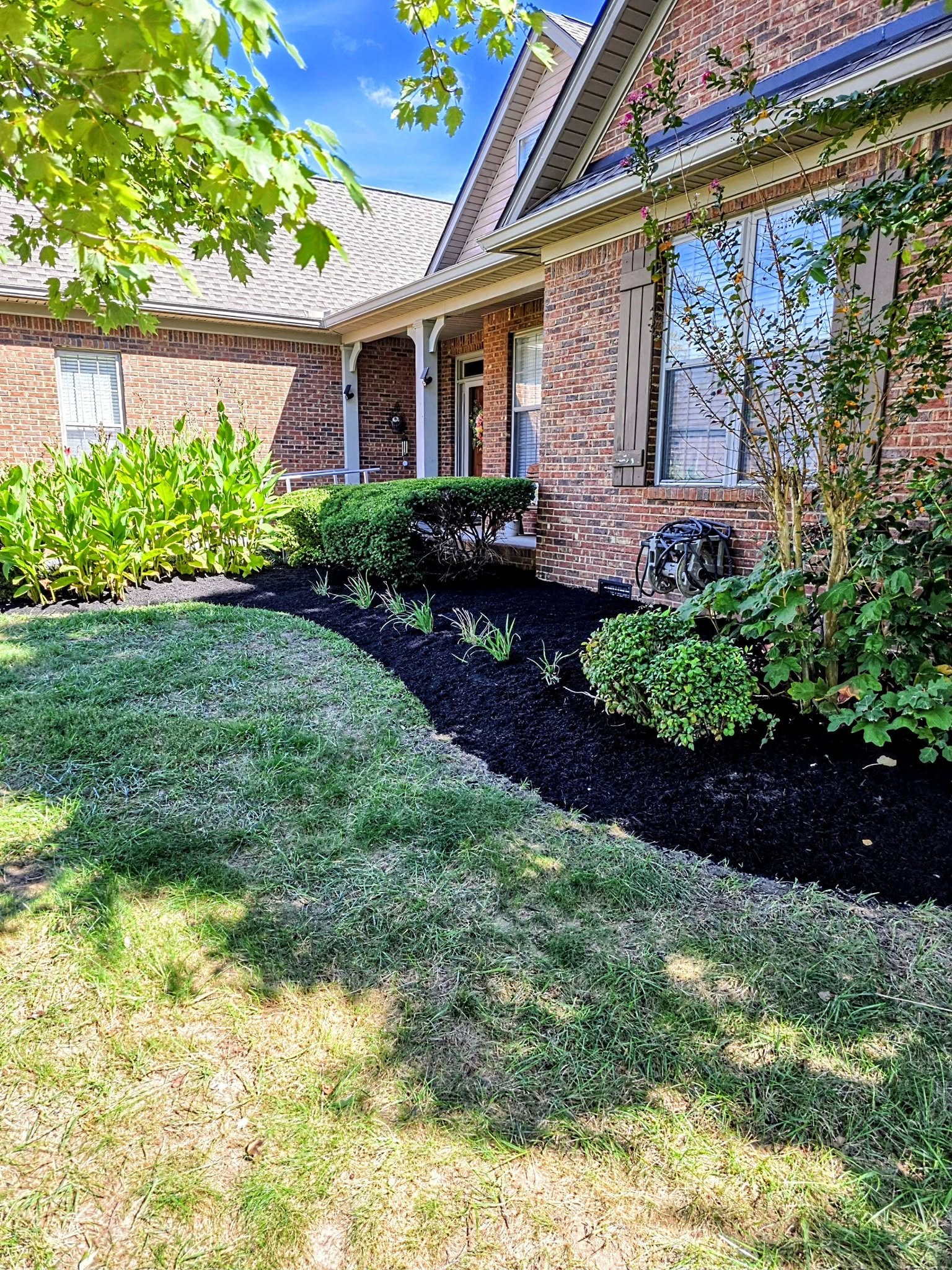
Don’t Skip the Edging
Mulch without a clean, shovel-cut edge tends to migrate into the lawn and lets grass roots creep back into the bed within a season. A deep, defined border is what keeps a fresh mulch job looking sharp for the full year instead of three months.