 Drainage & Grading
 Not every yard problem is a landscaping problem. Sometimes what looks like a lawn issue or a drainage nuisance actually traces back to how the property was originally graded. Here are five signs it’s time to look at excavation and regrading instead of another round of sod or mulch.
1. Standing Water After Every Rain
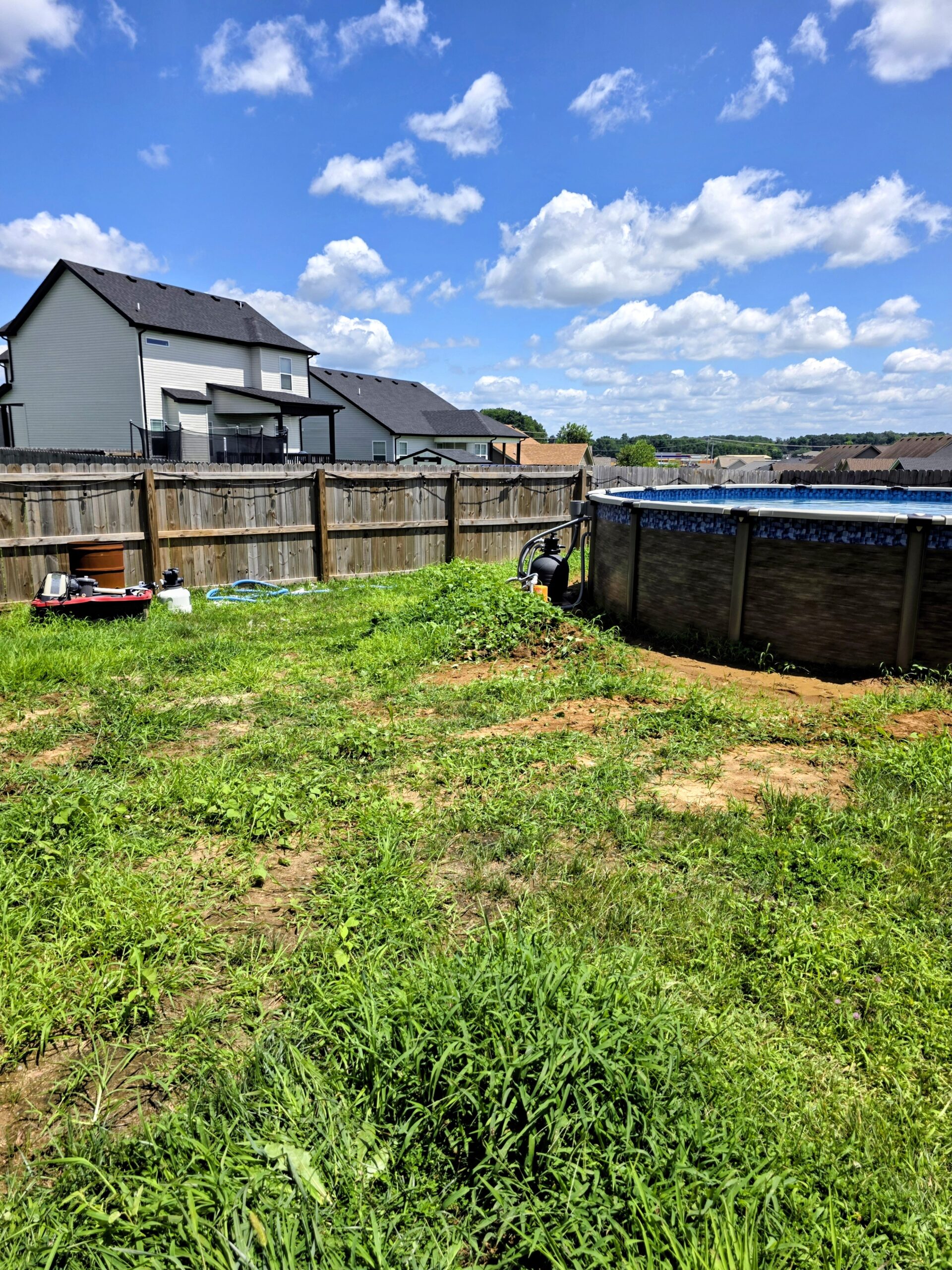
If water pools in the same low spot for a day or more after a storm, the grade in that area isn’t moving water away like it should. This usually means the yard needs to be re-sloped or a drainage swale cut to redirect flow.
2. Water Pooling Near the Foundation
This one matters more than cosmetic drainage issues — water sitting against a foundation over time can lead to real structural problems. Proper grading directs water away from the house, typically requiring a slope of at least a few inches over the first several feet from the foundation.
3. Eroded Bare Patches on Slopes
Bare dirt streaks running down a slope after rain are a sign of active erosion. Reseeding alone won’t fix it if the underlying grade or drainage path isn’t addressed first.
4. A Driveway or Path That’s Rutting or Shifting
Gravel or paver driveways that develop ruts, low spots, or shifting stone are often missing a properly excavated and compacted base — not just fresh material on top of what’s already there.
5. New Construction with Compacted, Bare Soil
New-build lots are often left with heavily compacted builder-grade soil and inconsistent grading straight from construction equipment. This is extremely common in growing areas like Sango, and it’s usually the reason new sod struggles to take root the first year.
Grading Is the Foundation for Everything Else
Before a retaining wall, patio, or new landscape bed goes in, the site needs to be cut, graded, and compacted correctly. Skipping this step is why so many DIY projects sink, shift, or keep flooding a season later.